During a night emergency, a fire hose is more than a water delivery line. It also affects deployment speed, crew movement and the ability to locate nozzles and couplings in low-visibility conditions.
For procurement teams, choosing a lightweight reflective fire hose should not be based on weight or appearance alone. Reinforcement material, pressure performance, abrasion resistance, visibility and the complete hose construction all need to be considered.
Why Hose Weight Matters
Conventional fire hoses can become difficult to carry and retrieve, especially when long hose runs, stairs, rough ground or water absorption are involved. Extra weight increases crew fatigue and may slow deployment.
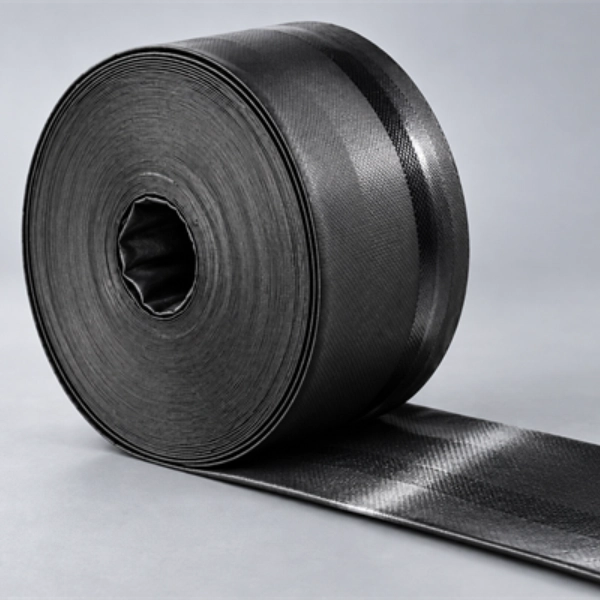
High-strength fibers such as UHMWPE can reduce the weight of the woven reinforcement while maintaining strength. A published prototype study reported that an UHMWPE-reinforced hose jacket was approximately 50% lighter than a conventional polyester-filament construction. The same study reported a 15% increase in burst pressure and about 50% more abrasion cycles.
These figures relate to the tested prototypes and should not be treated as universal specifications. Buyers should always request test reports for the exact hose construction being purchased.
Visibility Is a Safety Feature
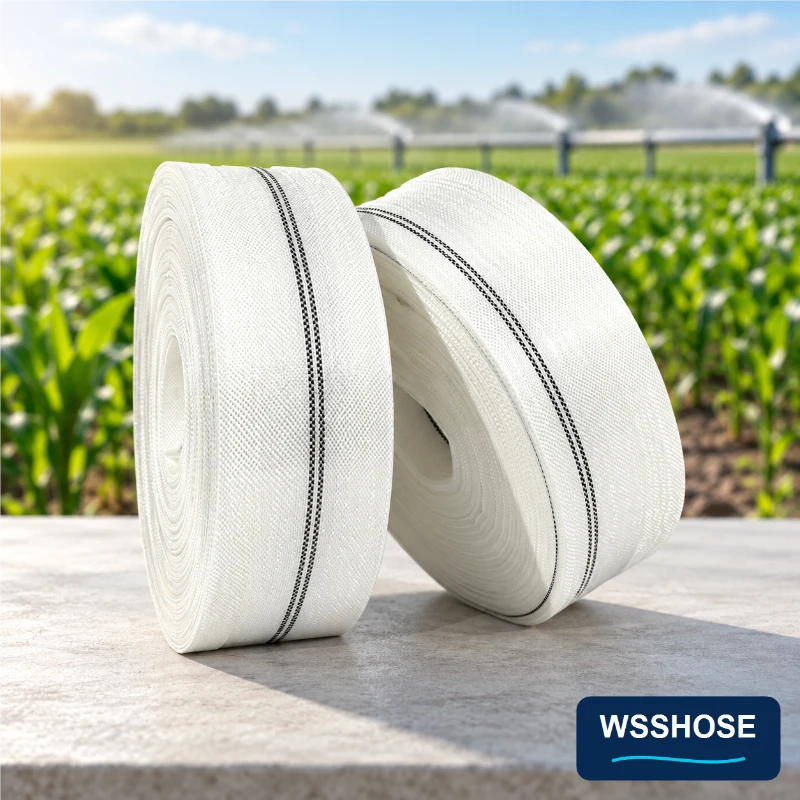
Reflective yarn or markings can make the hose route, nozzle and couplings easier to locate when illuminated by vehicle lights, flashlights or helmet lamps. This is useful at night, in smoke, around industrial equipment and at large emergency sites.
Buyers should distinguish between two different technologies:
Retroreflective material returns light toward its source and requires external illumination.
Photoluminescent material stores light and remains visible for a limited period after the light source is removed.
When requesting a reflective fire hose, confirm the visibility method, marking position, viewing distance and durability after bending, dragging and cleaning.
Abrasion Resistance Affects Service Life
Fire hoses are regularly dragged over concrete, gravel, metal edges and uneven ground. Damage to the outer jacket can expose the reinforcement layer and eventually lead to leakage or hose failure.
Material selection is important, but the complete construction also matters. The weave, liner adhesion, outer coating and coupling connection must work together. An abrasion-resistant coating may provide additional protection and improve grip, but it should not reduce flexibility or create problems during rolling and storage.
What “Floating Fire Hose” Should Mean
Low-density reinforcement can contribute to a lighter hose, but the fiber alone does not guarantee that the complete hose assembly will float.
For marine rescue, offshore operations or water-based firefighting, buyers should ask the supplier to verify the buoyancy of the finished hose, including the liner, coating, couplings and any protective sleeves. The test method and water conditions should also be confirmed before placing a bulk order.
Suitable Applications
Lightweight reflective fire hoses may be useful for:
Nighttime municipal and industrial firefighting
Forest and wildland fire response
Marine rescue and fireboat water delivery
Offshore and oilfield emergency water supply
Remote sites requiring frequent hose deployment
Emergency teams that need faster hose identification and retrieval
The final hose construction should still be selected according to working pressure, temperature, water source, ground conditions and required certification.
Before requesting a quotation, confirm the following:
- Hose diameter and required length
- Working and burst pressure requirements
- Reinforcement yarn and liner material
- Abrasion and aging test standards
- Reflective or photoluminescent method
- Coupling type and connection standard
- Finished-hose buoyancy requirements
- Required certification and inspection documents
- OEM color, marking and packaging requirements
- Batch testing and quality-control records
A lightweight hose can reduce handling effort, while reflective identification can improve visibility. However, real purchasing value comes from a balanced construction that combines manageable weight, reliable pressure performance, abrasion resistance and consistent bulk-order quality.
Send WSSHose your required diameter, length, working pressure, coupling standard and operating environment. Our team will help you review the hose construction and prepare an OEM quotation for your project.